Access appointments sooner
Explore available private ultrasound appointments, with medical guidance to help arrange the appropriate examination for your concerns.
Discuss your symptoms with a medical doctor and arrange an ultrasound scan suited to your clinical needs. Your care includes a specialist imaging report and a follow-up consultation to explain your results and any recommended next steps.
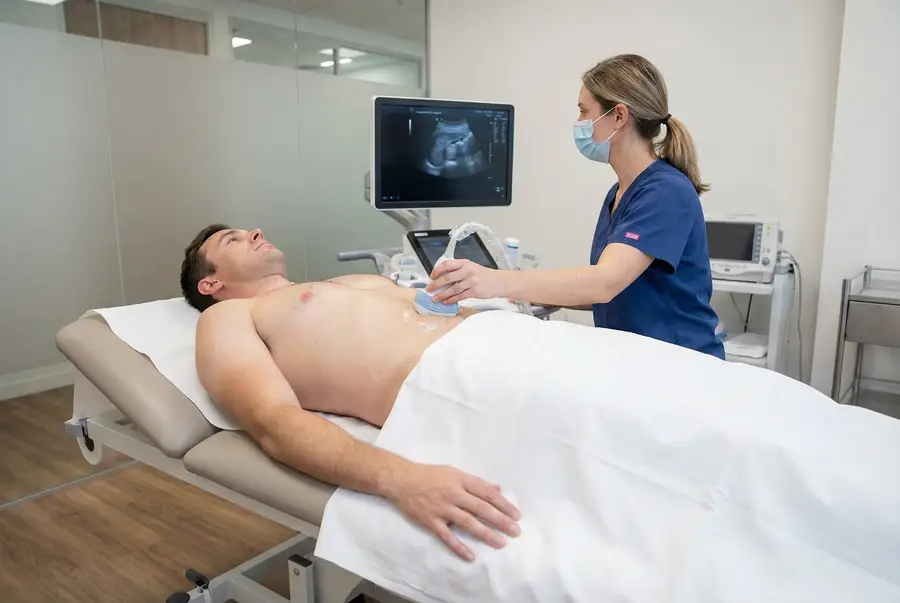
PrivateScans provides access to diagnostic ultrasound through a UK-wide network of scanning centres, supported by pre-scan medical assessment, specialist reporting and a follow-up consultation to discuss your results.
Explore available private ultrasound appointments, with medical guidance to help arrange the appropriate examination for your concerns.
Choose a participating centre and an appointment time that works for you, subject to availability.
Your booking includes a medical telephone consultation. A written referral is prepared where the examination is clinically appropriate.
Your agreed scan, medical consultations and specialist report are included in the confirmed price, explained before you proceed.
Explore our network of partner scanning centres and find a convenient location for your ultrasound examination.
Receive a written imaging report and a follow-up consultation to understand the findings and any recommended next steps.
Explore our guides to ultrasound of the abdomen, urinary tract, pelvis, neck, muscles and soft tissues. Your medical consultation helps confirm the examination that is appropriate for you.
An ultrasound scan uses high-frequency sound waves to produce live images inside the body. It can help assess organs, muscles, tendons, soft tissues and blood vessels without using the ionising radiation involved in X-rays or CT.
A small handheld device called a transducer sends sound waves into the area being examined. The returning echoes are processed by a computer to form moving images on a screen. The practitioner can examine structures in real time and save selected images and measurements for your report.
The technique is widely used for diagnostic imaging, but its suitability depends on the body area and the clinical question. PrivateScans does not currently offer pregnancy-related ultrasound services.
Your clinician may recommend ultrasound to investigate symptoms, examine a lump or swelling, assess an injury or monitor a known condition. The images can help clarify what is happening and guide decisions about treatment or further investigation.
Common areas assessed with ultrasound include:
An ultrasound scan is one part of your clinical assessment. It may not explain every symptom, and some findings need a different scan, additional testing or a specialist opinion.
Ultrasound provides real-time views, so the practitioner can assess movement as well as appearance. It is particularly useful for many superficial structures and selected internal organs, and can show soft tissues that are less clearly seen on a standard X-ray.
Most external examinations require little preparation and allow you to return to normal activities afterwards. Ultrasound also has limitations: bone and gas can restrict the views, and some deeper structures are better assessed with MRI or CT. Your doctor will advise on the most appropriate investigation.
Your results are usually available within three working days of your scan. A suitably qualified sonographer, consultant radiologist or relevant specialist clinician prepares a written imaging report. More complex examinations may require additional review and take slightly longer.
A post-scan consultation is then arranged with the same medical doctor who conducted your pre-scan consultation. Your doctor will explain the report in detail, answer your questions and discuss any necessary next steps.
Access to downloadable scan images is available where required for onward care. Any urgent finding is managed through the appropriate clinical escalation process.
A sonographer or another suitably trained practitioner explains the examination, confirms your consent and helps you into the appropriate position. You may need to adjust your clothing or change into a gown to expose the area being examined.
For an external scan, gel is applied to your skin to help the probe make contact. The practitioner moves the probe over the area and records images and measurements. You may be asked to change position, remain still or hold your breath briefly.
Most examinations are well tolerated, although pressure over an area that is already tender can cause discomfort. Tell the practitioner if anything is painful so they can adjust the examination where possible.
Many ultrasound examinations take around 15–45 minutes, depending on the body area and complexity. Your centre will confirm how much time to allow. After a routine external scan, the gel is wiped away and you can usually continue your normal activities.
Follow the instructions provided by your chosen scanning centre. Preparation varies by examination: some scans require no special preparation, while others need a full bladder or a period without food beforehand.
For certain pelvic or urinary tract scans, you may be asked to drink water and avoid emptying your bladder until instructed. For some abdominal scans, fasting helps improve the views. The centre will explain the exact requirements and timing.
Do not stop prescribed medicines unless your clinical team advises you to. Ask for individual guidance if fasting or drinking instructions could affect a condition such as diabetes or a prescribed fluid restriction.
Wear comfortable clothing that allows access to the relevant area. Tell the team about mobility needs, pain or concerns about an internal examination. You can request a chaperone and ask questions before giving consent.
The technique depends on the body area and the information your clinician needs.
Your doctor will advise on the appropriate examination. Availability and price are confirmed before booking. Pregnancy-related ultrasound is not offered.
A clear process, with medical support around your scan.
Choose the body area and explore centres and appointment options.
Discuss your symptoms and history so an appropriate referral can be prepared.
Your scanning centre confirms the appointment and preparation instructions.
Attend your agreed examination with the centre’s specialist imaging team.
Receive your report and discuss the findings and next steps with your doctor.
If you need help choosing an examination, our team can guide you through the next step.
Contact our teamYou do not need to obtain a referral from your usual GP beforehand. Your booking includes a pre-scan medical telephone consultation to review your symptoms, relevant history and reason for scanning. A written referral is prepared where the examination is clinically appropriate and sent to your chosen scanning centre.
Your booking includes a pre-scan telephone consultation with a medical doctor, a written referral where clinically appropriate, the agreed examination at your chosen centre and a written specialist imaging report. Downloadable images are available where required. A post-scan consultation is arranged to explain the findings and discuss any necessary next steps.
Ultrasound scans start from £195. This is our general starting price. The confirmed cost depends on the centre, body area and examination required. Your agreed scan and total price are explained before you proceed.
Many ultrasound examinations take around 15–45 minutes, although this varies with the body area, type of scan and complexity. Preparation, changing clothes and any additional views may affect the overall appointment time. Your centre will confirm how much time to allow.
Diagnostic ultrasound uses sound waves and does not expose you to ionising radiation. It is widely used in medical imaging. An external scan is usually comfortable, although pressure over a tender area or an internal probe can cause discomfort. The practitioner will explain the examination and respond to any concerns.
An external scan uses a probe moved over your skin. An internal scan uses a specially designed probe placed within the vagina or rectum to obtain closer views of particular structures. Internal examinations require informed consent and may be uncomfortable. You can request a chaperone, discuss alternatives and ask for the examination to stop at any time. The specific techniques offered depend on the centre and referral.
This depends on the examination. Some pelvic and urinary tract scans require a full bladder, while some abdominal examinations require fasting. Many other scans need no special preparation. Follow the centre’s specific instructions and ask for advice if they could affect a medical condition or your medicines.
PrivateScans does not currently offer pregnancy-related ultrasound services. Our ultrasound service focuses on diagnostic examinations for other clinical concerns.
After a routine external ultrasound scan, you can usually return to normal activities, including driving and eating or drinking as usual. Follow any individual instructions from your practitioner. If your appointment involves an additional procedure or medication, the centre will explain any restrictions in advance.
Results are usually available within three working days from the date of your scan. More complex examinations may take slightly longer. A post-scan consultation is then arranged with the same doctor who conducted your pre-scan consultation to explain the findings and discuss any necessary next steps.
Our medical team will review your concerns and advise whether ultrasound is appropriate. Where a scan is recommended, we will help arrange your examination and discuss the results with you afterwards.
Book an ultrasound scan