No GP referral needed to begin
Start your booking online or by phone. Our doctors review your needs and confirm whether DEXA is appropriate.
Accurate bone-density assessment for osteoporosis risk, fracture risk and ongoing bone-health monitoring, with clear reporting and clinical support.
PrivateScans helps you access appropriate DEXA bone density imaging, with GP support before and after your appointment.
Start your booking online or by phone. Our doctors review your needs and confirm whether DEXA is appropriate.

Access DEXA appointments through a network of CQC-registered clinics across the UK.

Appointment availability is often within a few days, depending on clinic availability and location selected.

Your DEXA measurements are reviewed and reported so your bone health can be assessed clearly.

A GP follow-up consultation helps you understand your report and consider the most appropriate next steps.

Clear scan pricing before you commit, with no hidden clinic fees added at the end of the booking journey.

Explore nearby scan centres and prices, or get help choosing the right scan.

Book your pre-scan consultation and complete your medical questionnaire before the appointment.

During a telephone consultation, an experienced GP will review your symptoms and medical history, confirm the most appropriate scan and issue your referral.
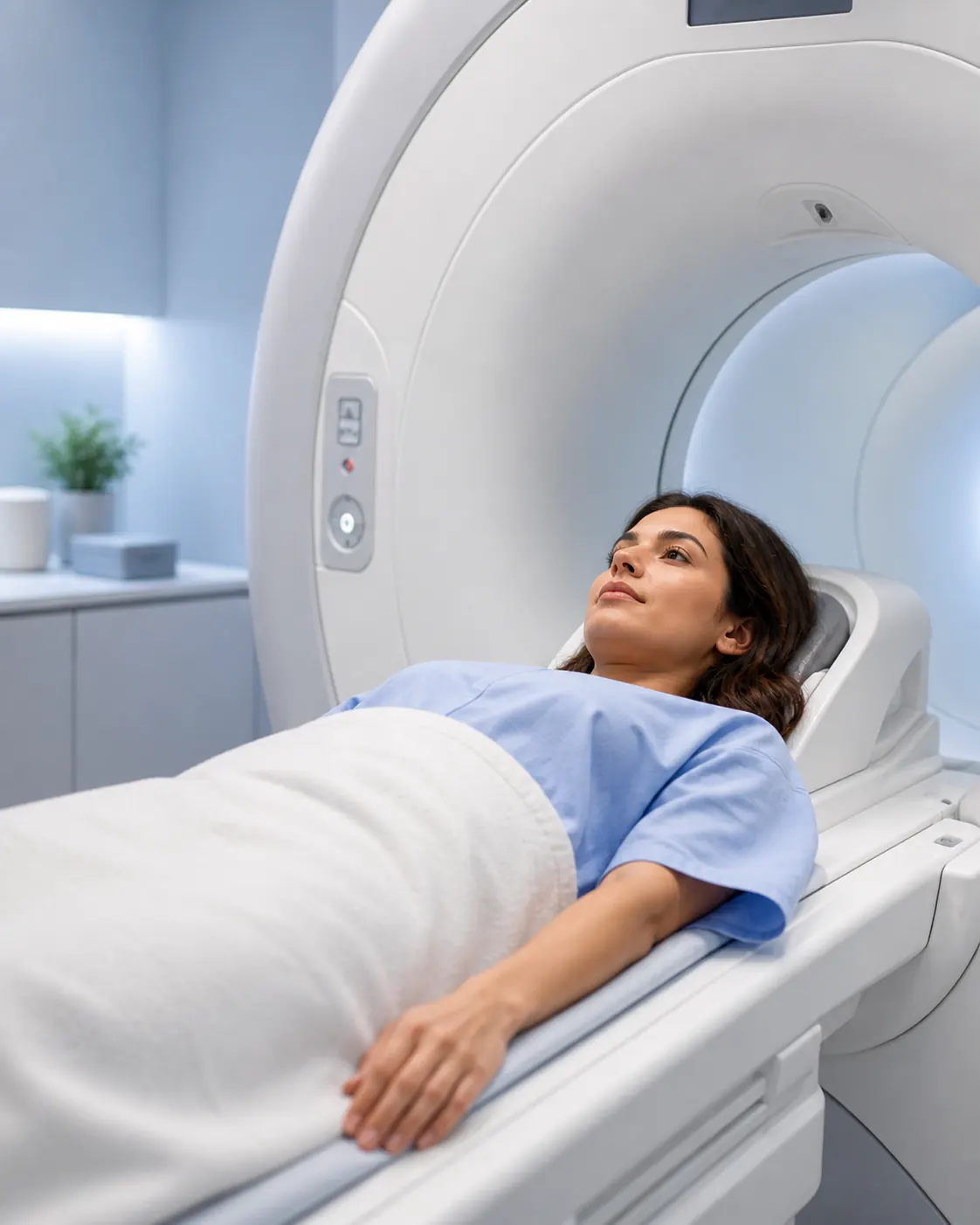
Attend your scan at one of our partner CQC-registered scanning centres, selected for convenience and high clinical standards.
Results arrive fast. A follow-up consultation with a GP will explain your results and guide you on what to do next if needed.
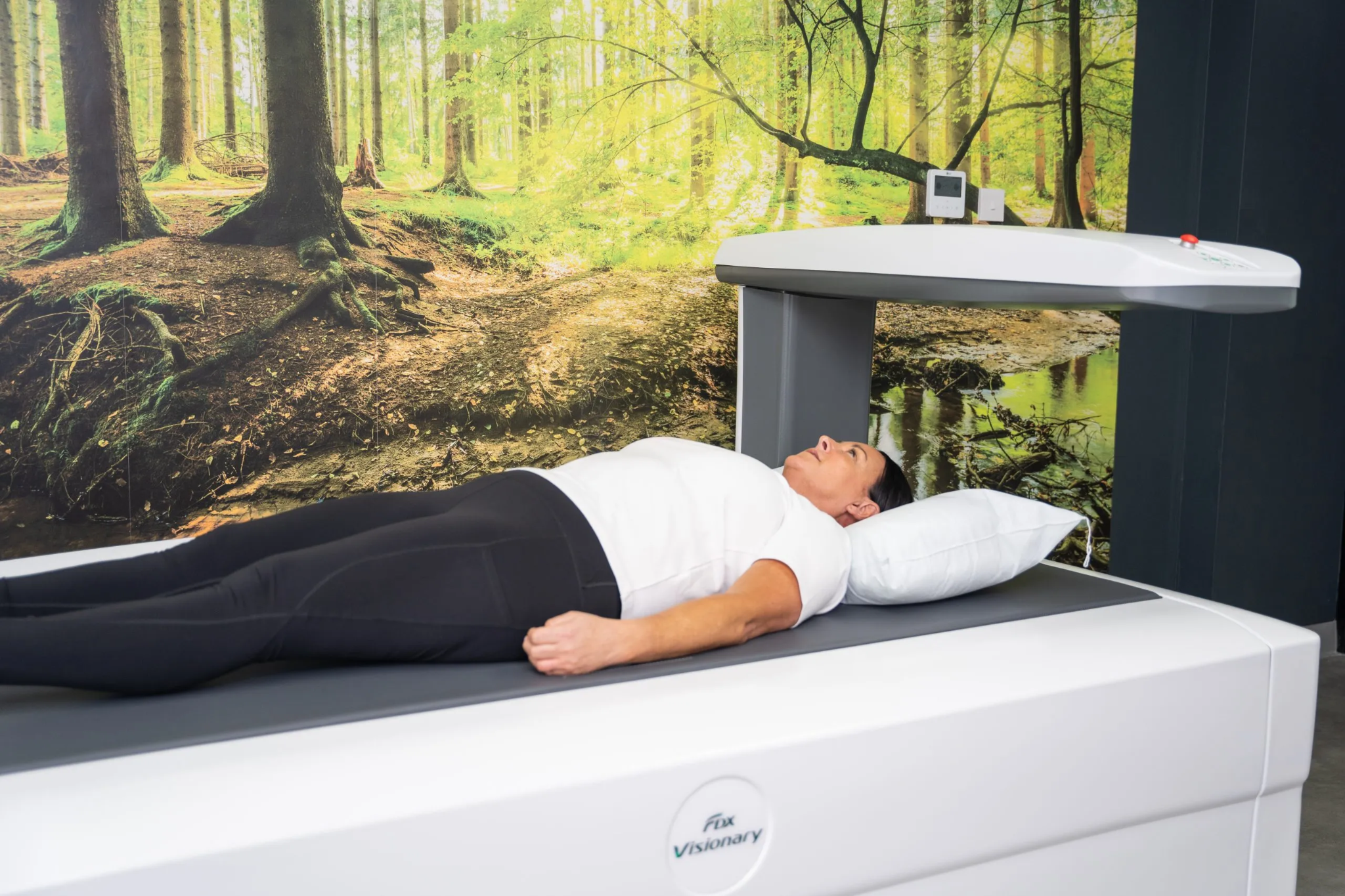
DEXA scans measure bone mineral density using low-dose X-Rays. The most common assessments focus on the hip and lumbar spine, helping clinicians assess osteoporosis risk and support bone health decisions.

Measures bone density at the hip, one of the key sites used to assess fracture risk.
Learn more
Assesses bone density in the lower spine, commonly used alongside hip measurements.
Learn more
A common combined assessment for osteoporosis, osteopenia and fracture-risk evaluation.
Learn more
May be used in selected cases where hip or spine measurement is not suitable.
Learn more
Helps assess bone mineral density and supports decisions about osteoporosis prevention or treatment.
Learn moreSpecialist body composition assessment may be available at selected centres where appropriate.
Learn moreBook a consultation call with one of our doctors for expert scan advice. If DEXA imaging is recommended, we can support the referral and help you choose the most appropriate scan.
Speak to a doctorA DEXA scan, also called DXA, is a bone density scan that uses low-dose X-Rays to measure how dense or strong your bones are.
DEXA is commonly used to assess osteoporosis risk, investigate low bone density and support decisions about treatment, prevention and monitoring.
DEXA uses a very low dose of ionising radiation. For most people, the risk is extremely low, but pregnancy screening is important because tests using radiation are generally avoided during pregnancy unless clearly justified.
The scan is quick, painless and non-invasive. Our clinical team will review your medical history and advise whether DEXA is appropriate.
A DEXA scan can provide useful information about bone mineral density and fracture risk, helping your clinician decide whether further monitoring, lifestyle changes or treatment may be needed.
When you book a private DEXA scan, you'll receive a full, end-to-end package of care, starting from just £150.
Our scan costs vary depending on the pricing set by the individual scanning centres.
Your total scan price includes the pre-scan GP consultation, scan, consultant radiologist’s report, scan images and post-scan GP consultation. A £25 consultation fee is payable when you book; if you decide not to proceed with the scan, the £25 consultation fee remains payable.
Explore ScansDuring a telephone consultation, a GP reviews your medical needs, confirms whether a DEXA scan is appropriate and prepares your medical referral where required.
Your appointment takes place at a trusted UK imaging centre.

Your scan measurements are reviewed and reported for clear bone health assessment.

A GP can explain your report and advise on appropriate next steps.
Access to your report and scan information can be arranged for onward care.
Clear answers to common questions about private DEXA scans, safety, appointments and results.
DEXA scans do cause ionising radiation exposure, though the risks are extremely low. Tests using ionising radiation, such as CT scans or DEXA scans, are generally not recommended for pregnant women unless the benefits strongly outweigh the risks.
Osteoporosis is a condition that weakens bones and increases the risk of broken bones and fractures. Risk factors include a family history of osteoporosis or hip fracture, low body weight or BMI, rheumatoid arthritis, chronic kidney disease or chronic liver disease.
Bone density tests like DEXA scans can help assess and monitor your risk of osteoporosis, which is important because osteoporosis is often not obvious until a break or fracture occurs.
You do not need a referral from your regular GP to begin. Our clinical team will contact you, gather the relevant medical information and prepare a referral if a DEXA scan is appropriate.
A DEXA scan is usually quick, painless and non-invasive. Most appointments are completed within a short visit, although the exact appointment length can vary by clinic and scan type.
Your results will be reviewed and reported. A GP follow-up consultation can help explain the findings and discuss whether onward care, monitoring or treatment advice may be appropriate.
Book a private DEXA scan to assess bone density, osteoporosis risk and fracture risk, with clear results and clinical guidance on what to do next.
Explore Scans