Access appointments sooner
Explore available private CT appointments and choose a suitable date, with medical guidance to help arrange the right examination.
Discuss your symptoms with a medical doctor and arrange a CT scan suited to your clinical needs. Your care includes a specialist imaging report and a follow-up consultation to explain your results and any recommended next steps.
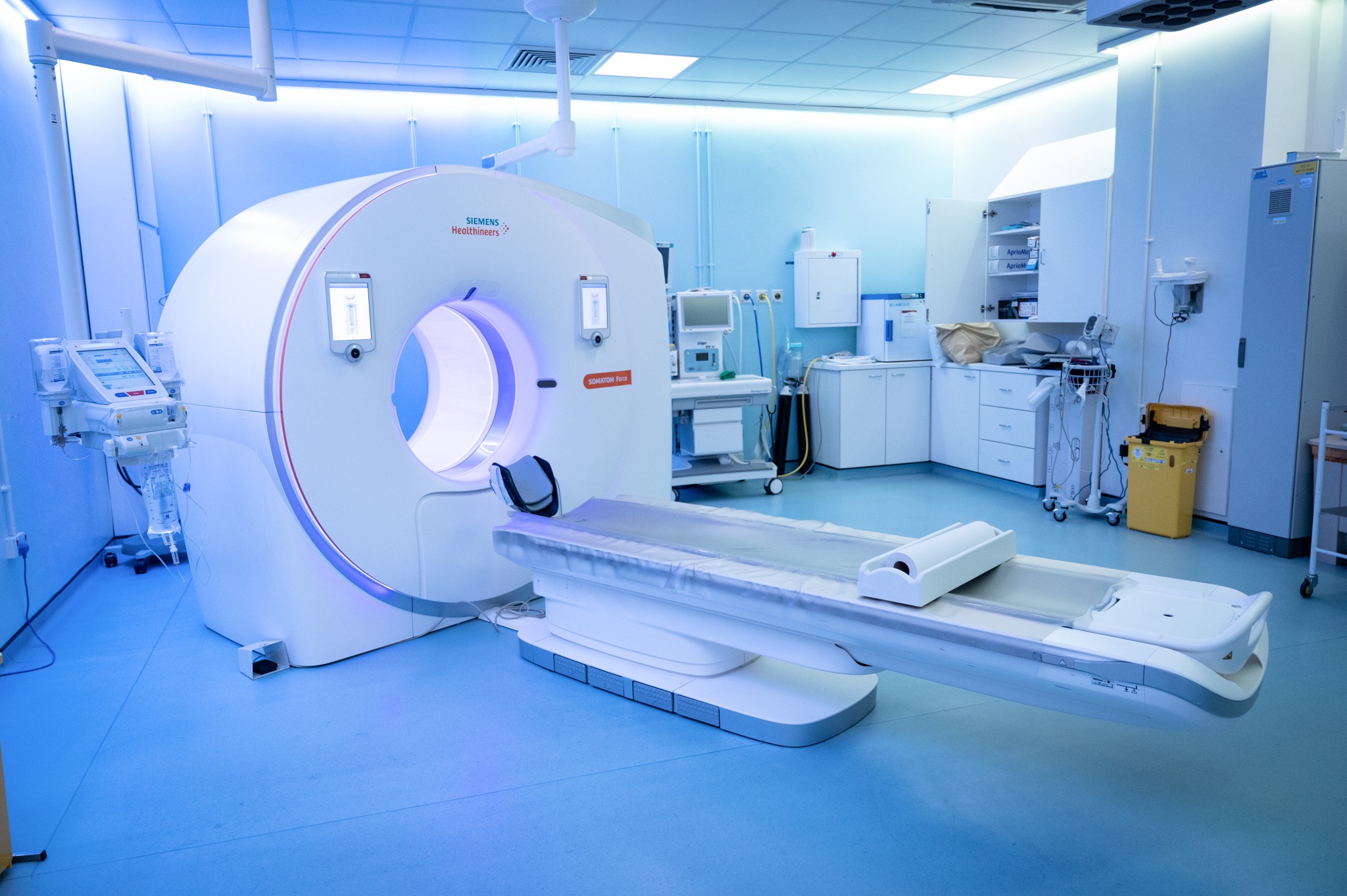
PrivateScans provides access to CT examinations through a UK-wide network of diagnostic centres, supported by pre-scan medical assessment, specialist reporting and a follow-up consultation to discuss your results.
Explore available private CT appointments and choose a suitable date, with medical guidance to help arrange the right examination.
Choose from participating scanning centres and appointment times, subject to availability, with a location that works for you.
Speak to a medical doctor before your scan. A written referral is prepared where CT is clinically appropriate.
Your agreed examination, medical consultations and specialist report are included in the confirmed price, explained before you proceed.
Find a convenient CT scanning centre through our network of diagnostic partners and compare the options available near you.
Results are usually available within three working days, followed by a consultation to explain the report and any necessary next steps.
Explore our guides to CT of the head, chest, abdomen, pelvis, bones and joints. Your medical consultation helps confirm the examination that is appropriate for your symptoms and history.
CT stands for computed tomography. It is a diagnostic imaging examination that uses X-rays and computer processing to create detailed cross-sectional pictures inside the body. These images help a radiologist assess bones, internal organs, soft tissues and blood vessels.
The scanner has a short, ring-shaped opening. As you lie on a moving table, the equipment records images from multiple angles. A computer combines this information into thin image slices, which can be viewed in different planes and, where useful, reconstructed into three-dimensional views.
CT is different from a conventional X-ray, which usually produces a projection image. The additional cross-sectional detail can help clarify the location and extent of an abnormality. The body area and scanning protocol are selected to answer a specific clinical question.
Your doctor may recommend CT to investigate symptoms, clarify a finding from another examination or assess a condition that has already been diagnosed. It can support diagnosis, help plan treatment and show how a condition is responding to care.
CT uses ionising radiation, so the expected benefit must justify the exposure. Your clinical assessment considers whether CT is suitable or whether another investigation, such as MRI or ultrasound, would be more appropriate.
CT can help identify and assess a wide range of abnormalities. Depending on the body area and protocol, it may be used to investigate:
The examination is tailored to your referral. A general CT scan does not assess every condition, and some concerns need a dedicated protocol, another type of scan or further tests.
Your results are usually available within three working days of your scan. A consultant radiologist or relevant specialist clinician reviews your images and prepares a written report. More complex examinations may require additional review and take slightly longer.
A post-scan consultation is then arranged with the same medical doctor who conducted your pre-scan consultation. Your doctor will explain the report, answer your questions and discuss any necessary next steps.
Access to downloadable scan images is available where required for onward care. Any urgent finding is managed through the appropriate clinical escalation process.
A radiographer explains the examination, checks your details and positions you on a flat table. The table moves through the scanner’s short, ring-shaped opening while images are recorded.
You will need to remain still and may be asked to hold your breath briefly. The radiographer operates the scanner from an adjoining room and can hear and speak to you throughout the examination.
Image acquisition is often very quick. The overall appointment takes longer because of safety checks, positioning and any contrast preparation. Your centre will confirm how much time to allow for your particular examination.
Some scans use a contrast agent, given as an injection or drink, to make certain structures easier to assess. If contrast is needed, the team will explain how it is given and whether observation is required afterwards.
Follow the instructions provided by your scanning centre. Eating, drinking and medication instructions vary according to the examination and whether contrast is planned. Do not stop prescribed medicines unless your clinical team advises you to.
Tell the team if you are pregnant or could be pregnant, have kidney or thyroid problems, diabetes or asthma, or have previously reacted to contrast. Provide details of your medicines and any relevant allergies.
If intravenous contrast is planned, the centre may need a recent kidney function blood test. Any required testing and preparation will be explained before your appointment.
You may be asked to change into a gown and remove metal items from the area being scanned. Let the centre know about pain, mobility needs or anxiety so appropriate support can be discussed.
The scan is selected for the body area and the clinical question. Some examinations use a dedicated protocol.
Your doctor will advise on the appropriate examination. Availability and price are confirmed before booking.
A clear process, with medical support around your scan.
Choose the body area and explore centres and appointment options.
Discuss your symptoms and history so an appropriate referral can be prepared.
Your scanning centre confirms the appointment and preparation instructions.
Attend your agreed examination with the centre’s specialist imaging team.
Receive your report and discuss the findings and next steps with your doctor.
If you need help choosing an examination, our team can guide you through the next step.
Contact our teamYou do not need to obtain a referral from your GP beforehand. Your booking includes a pre-scan medical telephone consultation to review your symptoms, medical history and reason for scanning. A written referral is prepared where CT is clinically appropriate, and your examination is subject to the scanning centre’s clinical checks.
Your booking includes a pre-scan telephone consultation with a medical doctor, a written referral where clinically appropriate, your agreed scan at the chosen centre and a written imaging report prepared by a consultant radiologist or relevant specialist. Downloadable images are available where required. A post-scan consultation is arranged to explain the findings and discuss any necessary next steps.
CT scans start from £395. This is our general starting price. The confirmed cost depends on the centre, body area, use of contrast and any specialist protocol. We explain the agreed examination and total price before you proceed.
The images themselves can be acquired in a short time, but you should allow longer for your appointment. Safety checks, positioning, contrast preparation and any observation afterwards all affect the time needed. Your scanning centre will confirm the expected duration before you attend.
Not every CT scan requires contrast. It depends on the area being examined and the clinical question. Contrast can make blood vessels and certain tissues easier to assess. If it is needed, the team explains the procedure and checks relevant medical history, kidney function and any previous reactions.
The scan itself is usually painless, although remaining still or lying in a particular position may be uncomfortable if you have an injury. An intravenous contrast injection involves a needle and can cause a brief warm sensation or metallic taste. Tell the radiographer if you are uncomfortable or feel unwell.
CT uses X-rays to produce cross-sectional images and is often particularly useful for bones, lungs and selected internal organ or blood vessel concerns. MRI uses a magnetic field and radio waves, with advantages for many soft tissue questions. The most suitable examination depends on your symptoms, medical history and the information your doctor needs.
Tell your doctor and the scanning centre if you are pregnant or could be pregnant before the examination. CT uses ionising radiation, so the clinical team must consider the expected benefit, body area and available alternatives before deciding whether to proceed.
Results are usually available within three working days from the date of your scan. More complex examinations may take slightly longer. A post-scan consultation is then arranged with the same medical doctor who conducted your pre-scan consultation to explain your results in detail and discuss any necessary next steps.
Our medical team will review your concerns and advise whether CT is appropriate. Where a scan is recommended, we will help arrange your examination and discuss the results with you afterwards.
Book a CT scan