Scan overview
- A calcium score test is a non-contrast CT examination that measures calcified plaque in the coronary arteries supplying the heart.
- The result may help refine cardiovascular risk assessment in selected people when it could influence preventive care.
- It does not directly measure artery narrowing or blood flow, and a zero score does not exclude all coronary plaque or explain every chest symptom.
- The test uses X-rays and should be clinically appropriate rather than treated as a routine check for everyone.
- PrivateScans CT scans start from £395. The team will confirm the price of your calcium scoring examination before you proceed.
What is a calcium score test?
A coronary artery calcium score, often called a CAC score, is obtained from a dedicated computed tomography scan of the heart. It identifies and measures calcium within plaque in the coronary arteries.
These arteries supply the heart muscle with blood. Plaque can accumulate in their walls as part of atherosclerosis, and some of that plaque becomes calcified. The amount of detectable coronary calcium provides information about the burden of calcified plaque.
A calcium score scan usually does not require a contrast injection. ECG electrodes on the chest help coordinate the images with the heartbeat and reduce the effect of movement.
The result is used alongside clinical information rather than as a standalone diagnosis. It is different from a blood calcium test, which measures calcium in the bloodstream and does not quantify coronary plaque.
Why might calcium scoring be recommended?
Your clinician may consider the test when the result could clarify cardiovascular risk and help with a decision about preventive care. Its value depends on your existing risk assessment and whether the result would change management.
The consultation may consider factors including:
- Age and relevant medical history.
- Cholesterol levels and blood pressure.
- Smoking history.
- Diabetes and other conditions affecting cardiovascular risk.
- A family history of premature coronary heart disease.
- Uncertainty about the next step in prevention after an initial assessment.
Having a risk factor does not automatically mean a scan is needed. Some people already have a clear indication for preventive care, while others are unlikely to gain useful information from testing.
The aim is to answer a defined clinical question, not to provide a guarantee about future heart health.
Who may not benefit from the test?
Calcium scoring is not a universal screening test. If coronary disease is already established or the appropriate preventive treatment is clear, the result may not add information that changes care.
People at very low risk may also gain little benefit. Suitability is considered individually, taking account of the potential information, radiation exposure and whether another assessment is more appropriate.
It is not a substitute for investigating chest symptoms. A low or zero score should not be used to dismiss chest pain or conclude that symptoms are unrelated to the heart.
New, severe or ongoing chest pain, marked breathlessness or collapse needs urgent medical assessment. Do not wait for a routine calcium score appointment.
What does the scan show?
The examination identifies areas of calcification in the coronary arteries. A numerical score, commonly an Agatston score, is calculated from features including the area and density of the detected calcium.
A higher score generally reflects a greater burden of calcified coronary plaque. The interpretation may also consider how the result compares with people of a similar age and sex, where an appropriate comparison is provided.
The scan does not directly show every type of plaque. It does not measure blood flow through the arteries or establish how severely a particular segment is narrowed.
It is also not a complete assessment of valve function, heart rhythm, pumping performance or every structure within the chest. Other investigations may be needed for those questions.
Understanding a zero or raised score
A score of zero
A zero score means no coronary calcium was detected by this examination. This can be useful information in an appropriate risk assessment, but does not mean that no plaque is present or that future cardiovascular risk is absent.
Non-calcified plaque is not measured by calcium scoring. Your symptoms and other risk factors still matter, and a zero score does not rule out all causes of chest pain or coronary disease.
A positive or higher score
A positive score indicates detected calcified coronary plaque. The amount is considered with your broader risk profile rather than interpreted in isolation.
The result may support a discussion about cholesterol management, blood pressure, smoking cessation or other preventive measures. It does not automatically mean that an artery is critically narrowed or that a procedure is required.
What the number cannot predict
A score does not determine whether or when an individual will have a heart attack. It contributes to a probability-based risk assessment. Do not start, stop or change prescribed treatment solely on the basis of a number without discussing it with your clinician.
Calcium scoring and coronary CT angiography
A coronary CT angiogram uses an iodine-based contrast injection to assess the coronary arteries in a different way. It may help investigate plaque and narrowing where coronary disease is suspected after clinical assessment.
Calcium scoring uses a non-contrast protocol to quantify calcified plaque. It does not replace an angiogram when the clinical question requires a more detailed assessment of the arteries.
Both are forms of cardiac CT, but preparation, medicines, contrast and appointment arrangements can differ. The referral and booking need to identify the examination required.
Other investigations, such as echocardiography, rhythm monitoring or cardiac MRI, provide different information and may be more appropriate for another concern.
How does a calcium score CT work?
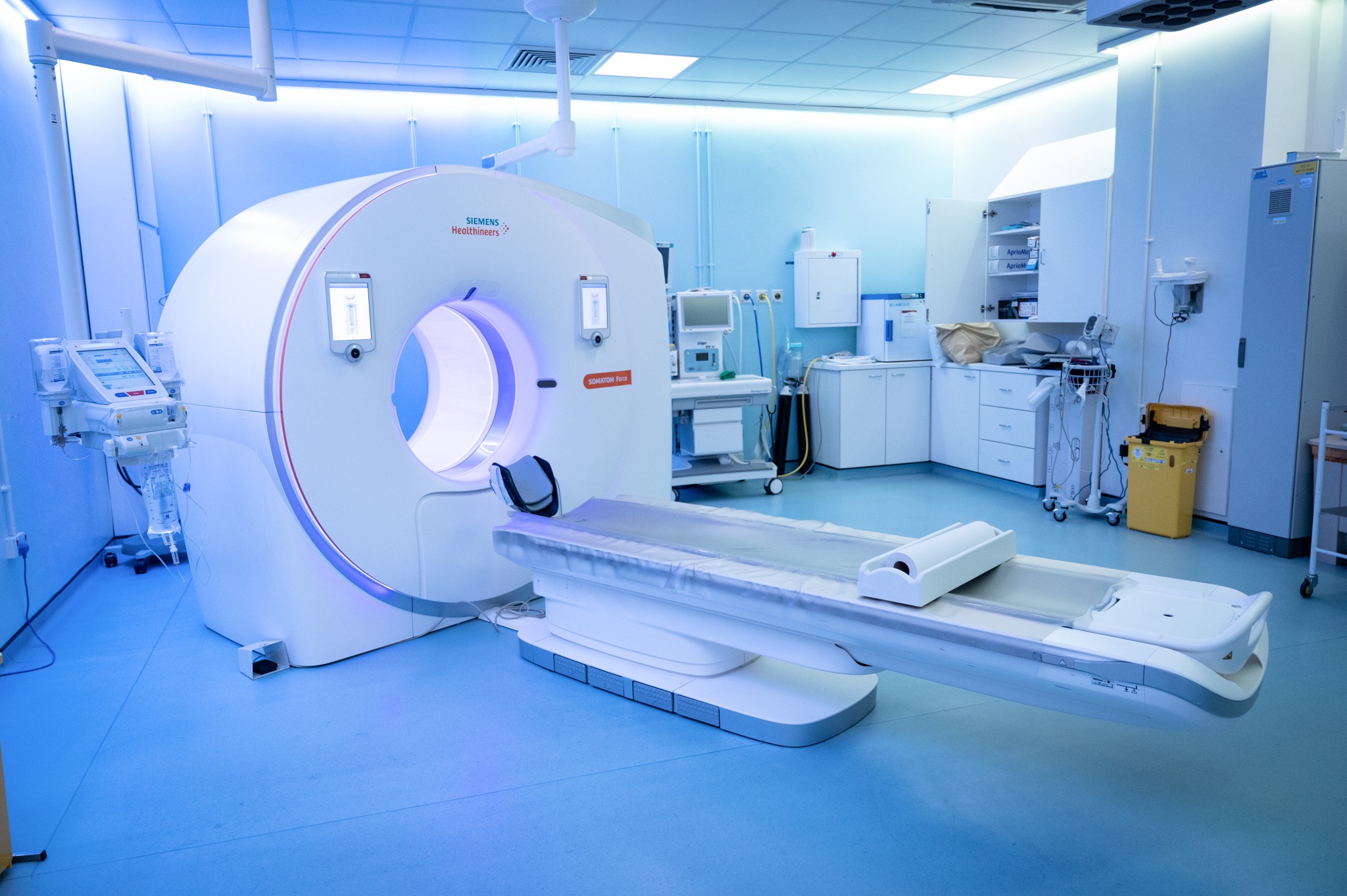
A CT scanner has a short, ring-shaped opening and a motorised table. An X-ray source and detectors rotate around the chest, and a computer uses the measurements to create cross-sectional images.
ECG electrodes record the heartbeat so that image acquisition can be coordinated with the cardiac cycle. This is used for scan timing; it is not a substitute for a full investigation of a heart rhythm concern.
You may be asked to hold your breath briefly to reduce movement. The radiographer operates the scanner from the control area and can see and communicate with you throughout the examination.
Preparing for your calcium score test
Your centre will provide instructions for the protocol. These may include avoiding caffeine or nicotine for a specified period and advice about food, drink and regular medicines.
Follow the exact instructions rather than assuming that all cardiac scans have the same preparation. Do not stop prescribed treatment or change existing fluid restrictions without clinical advice.
Before the appointment, tell the team about:
- Pregnancy or possible pregnancy.
- Known coronary disease, previous cardiac procedures and relevant earlier tests.
- An irregular heartbeat or another cardiac condition.
- Regular medicines and relevant medical conditions.
- Difficulty lying flat, keeping still or holding your breath briefly.
You may change into a gown to allow ECG electrodes to be placed on the chest. Metal near the imaged area may need to be removed because it can affect the images. CT does not have the same magnetic restrictions as MRI.
A standard calcium score usually does not need an intravenous contrast injection. If a different examination is proposed, the team will explain the additional requirements.
What happens during the examination?
- Review and explanation. The team checks the referral, preparation and relevant medical information.
- Preparing for imaging. You may change clothing and remove items near the chest that could affect image quality.
- ECG electrodes. Small adhesive electrodes are attached to the chest. Skin may be prepared to help them make contact.
- Positioning. You lie on your back on the scanner table and the team helps you into the required position.
- Image acquisition. The table moves through the short scanner opening. Keep still and follow instructions about a brief breath hold.
- Completion. The radiographer checks the images, removes the electrodes and explains any aftercare.
Image acquisition is usually brief. Tell the team if you are uncomfortable or cannot manage an instruction. A radiologist or relevant specialist subsequently reviews the study and prepares the report.
Benefits, radiation and limitations
Calcium scoring is a brief, non-contrast examination that may add useful information to a selected cardiovascular risk assessment. Its main benefit is helping a clinician make a more informed prevention decision where uncertainty remains.
CT uses ionising radiation. The expected benefit and exposure are considered before scanning, and the protocol is selected to obtain useful information while managing exposure. Tell the team about pregnancy or possible pregnancy beforehand.
Movement, rhythm and other technical factors can affect the study. The score does not measure every plaque type or explain all symptoms. Further assessment may still be required, and additional imaging is not automatically necessary for every positive score.
Repeated scanning should have a clinical purpose rather than follow an automatic schedule. Your clinician will explain whether another test or follow-up examination is likely to change care.
Appointment length and aftercare
The scan itself is usually brief, but allow additional time for registration, changing, ECG electrode placement and positioning. Your centre will confirm the expected appointment length.
Most people can return to their usual routine after a standard calcium score examination. There is normally no contrast injection or sedation involved in the routine protocol.
Continue your prescribed medicines and existing clinical advice unless your clinician tells you otherwise. Do not change treatment while waiting for the score without appropriate medical guidance.
Getting and understanding your results
Your scan images are reviewed by a consultant radiologist or relevant specialist clinician, who prepares a written imaging report. Results are usually available within three working days of the date of your scan. More complex examinations may require additional specialist review and can take slightly longer.
Once your results are available, a post-scan consultation will be arranged with the same medical doctor who conducted your pre-scan consultation. This continuity allows your doctor to consider the findings alongside the symptoms, medical history and concerns you discussed before your scan.
During the consultation, your doctor will explain the report in detail, answer your questions and discuss what the findings mean for you. Where further assessment or care is needed, they will explain the recommended next steps, which may include additional investigations, a specialist referral or follow-up with your usual healthcare team.
How much does a private calcium score test cost?
Coronary artery calcium scoring starts from £445. The confirmed cost depends on your chosen centre and agreed examination. Your team will explain the total price and included services before you proceed.
A calcium score and a CT coronary angiogram are different examinations. CTCA starts from £1,095, or the combined CTCA and calcium-scoring option from £1,540. See our Cardiac CT scan options for details. Any additional tests or treatment are separate unless specifically agreed.
Arrange a private calcium score test
Your booking includes a 30-minute private telephone consultation with a medical doctor at a convenient time. The doctor will review your cardiovascular risk factors, relevant medical history, medicines and previous investigations before advising whether calcium scoring is clinically appropriate.
Where imaging is indicated, the referral sets out the question and relevant context. If another assessment would be more useful, your clinician will explain the recommended approach.
You can explore our other CT body part examinations. New or severe chest symptoms need urgent clinical assessment rather than a routine risk-assessment scan.
FAQs
Is a calcium score the same as a blood calcium test?
No. A blood test measures calcium in the bloodstream. This CT examination measures calcified plaque in the coronary arteries.
Does a zero score mean my arteries are completely clear?
No. It means no coronary calcium was detected on the examination. Non-calcified plaque and other causes of symptoms may still be present.
Can the score show how narrow an artery is?
Not directly. It measures calcified plaque burden rather than blood flow or the severity of a particular narrowing. Another investigation may be needed for that question.
Will I need a contrast injection?
A standard coronary calcium score is a non-contrast examination. A coronary CT angiogram is different and uses intravenous contrast.
Should I have a calcium score for chest pain?
Chest pain needs clinical assessment. A calcium score is not a substitute for investigating symptoms, and a low result should not be used to dismiss them. Acute concerning symptoms require urgent care.
How often should I repeat the test?
There is no automatic interval suitable for everyone. Repeat imaging should be considered only where the result could influence management, taking account of previous findings and radiation exposure.
When will my results be available?
Results are usually available within three working days of your scan. More complex examinations can take slightly longer. A post-scan consultation will be arranged with the same doctor who conducted your pre-scan consultation to explain the findings and any necessary next steps.
What’s included with your scan?
What is included with your scan:
- A pre-scan telephone consultation with a member of our medical team.
- A written medical referral prepared from the information discussed during your consultation, where clinically appropriate.
- Your scan at the chosen scanning centre.
- A written imaging report prepared by a consultant radiologist or relevant specialist clinician.
- Access to downloadable copies of your scan images where required.
- A post-scan consultation to discuss your results and next steps where needed.