Access appointments sooner
Explore available private DEXA appointments, with medical guidance to help arrange an appropriate assessment of your bone health.
Assess your bone density and understand your risk of osteoporosis with a low-dose X-ray examination. Your care includes a medical consultation, a written specialist report and a follow-up appointment to explain your results and any recommended next steps.
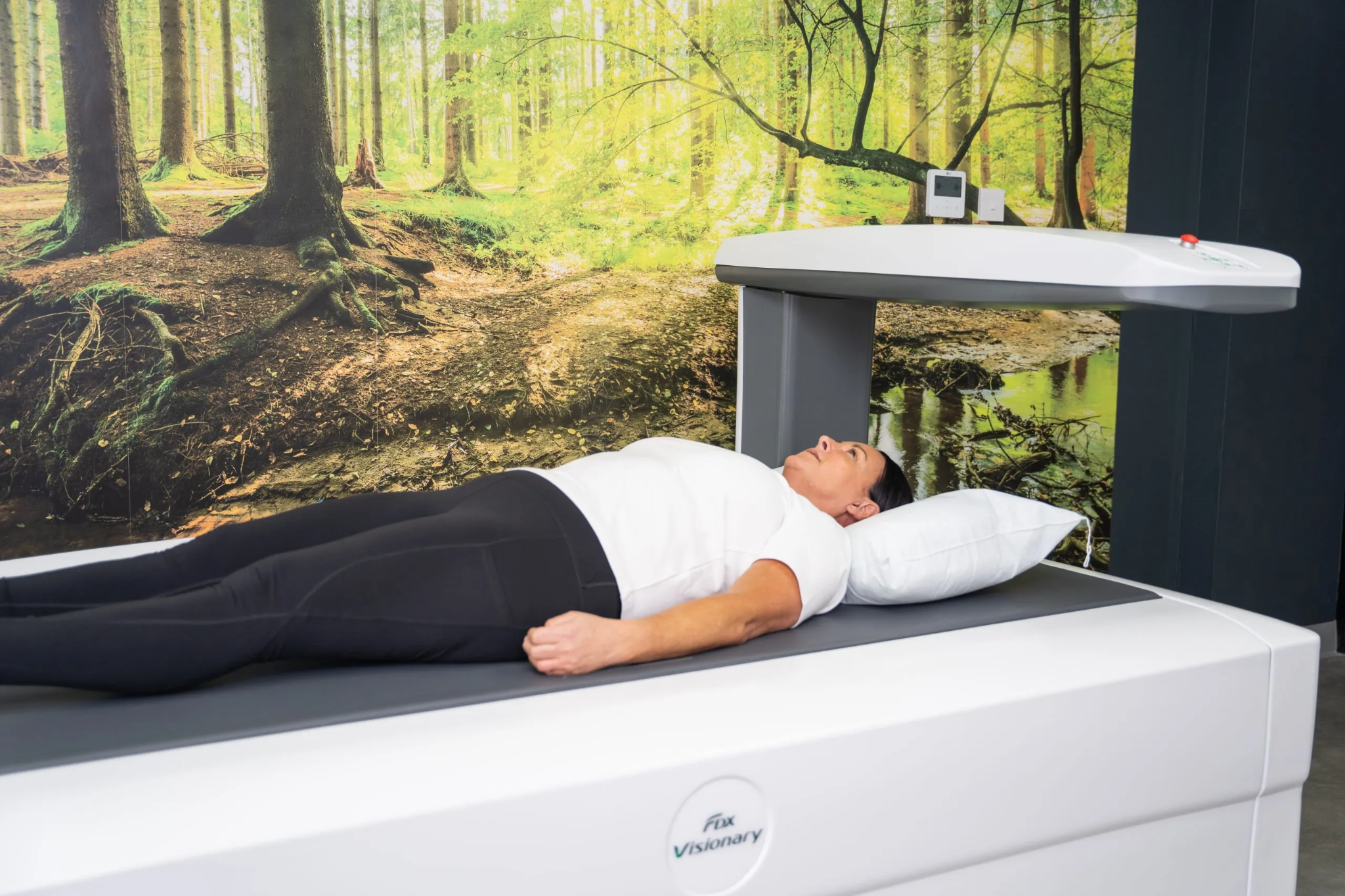
PrivateScans provides access to bone-density examinations at participating diagnostic centres, supported by pre-scan medical assessment, specialist reporting and a follow-up consultation to discuss your results.
Explore available private DEXA appointments, with medical guidance to help arrange an appropriate assessment of your bone health.
Choose a participating centre and appointment time that works for you, subject to availability.
Your booking includes a medical telephone consultation. A written referral is prepared where a DEXA scan is clinically appropriate.
Your agreed examination, medical consultations and specialist report are included in the confirmed price, explained before you proceed.
Explore participating diagnostic centres in our network and find a convenient location for your bone-density examination.
Results are usually available within three working days, followed by a consultation to explain the measurements and any necessary next steps.
DEXA stands for dual-energy X-ray absorptiometry. Also known as DXA or bone densitometry, it measures bone mineral density: the amount of mineral present within a measured area of bone.
A standard bone-density examination usually assesses the hip and lower spine. These measurements help identify low bone density, support the diagnosis of osteoporosis in appropriate patients and inform an assessment of fracture risk.
The scan uses low-dose X-rays and is performed on an open examination table. It does not involve a tunnel or a routine injection, and most people find the examination straightforward and comfortable.
A scanning arm moves slowly over the selected area while you lie on a padded table. The equipment uses X-rays at two energy levels and measures how they are absorbed to calculate bone mineral density.
The results are compared with reference values and interpreted alongside factors such as age, medical history, previous fractures and medicines. Your height and weight may also be recorded as part of the assessment.
DEXA measures bone density rather than every aspect of bone strength. It helps estimate fracture risk but cannot predict with certainty whether you will break a bone.
Your clinician may recommend DEXA if your history suggests an increased risk of osteoporosis or a fragility fracture, or to monitor bone health when the result could influence treatment. Relevant factors can include:
Not everyone with one of these factors needs a scan. Your doctor will consider your overall risk and whether the result would change your care. DEXA may also be used to monitor diagnosed osteoporosis or response to treatment at an appropriate interval.
Your results are usually available within three working days of your scan. Your measurements are reviewed by a healthcare professional trained in DEXA interpretation, who prepares a written report. More complex examinations may require additional review and take slightly longer.
A post-scan consultation is then arranged with the same medical doctor who conducted your pre-scan consultation. Your doctor will explain the findings, place the measurements in the context of your fracture risk and discuss any necessary next steps.
Depending on your assessment, next steps may include advice on bone health, investigation of possible causes of low bone density or discussion of treatment and specialist review. Access to your report and images is available where required for onward care.
A trained practitioner checks your details, explains the procedure and helps you lie on the scanner’s open, padded table. The areas to be measured are confirmed from your referral.
For the lower spine, your legs may be supported on a padded block. For a hip measurement, your foot may be positioned in a support to keep the leg at the correct angle. The practitioner will help you maintain the required position.
The scanning arm moves slowly over you while images and measurements are recorded. You need to keep still, and may be asked to hold your breath briefly. The equipment is generally quiet, and you remain awake throughout.
A routine bone-density examination commonly takes around 10–20 minutes, with extra time for preparation or additional measurements where needed. You can usually return to normal activities afterwards.
Follow the instructions from your chosen centre. You can usually eat and drink normally before a routine DEXA scan. Ask the team whether you need to adjust the timing of calcium supplements, and do not stop prescribed medicines unless advised to do so.
Wear comfortable clothing without metal fastenings around the area being scanned. Zips, hooks, buttons or other items may affect the measurements, so you may be asked to remove them or change into a gown.
Tell the centre if you are pregnant or could be pregnant, have recently had a contrast examination or nuclear medicine test, or have metalwork or a joint replacement near the area being assessed. These details may affect timing or the measurement sites used.
Let the team know about difficulty lying flat, pain or mobility needs. If you have previous DEXA reports, ask whether these should be provided to help with comparison.
Your clinician interprets the measurements according to your age, clinical circumstances and the areas scanned.
Your doctor will explain whether the findings indicate low bone density or osteoporosis and whether further investigation or treatment should be considered.
Both use DEXA technology, but they answer different questions. A bone-density scan usually measures selected skeletal sites to support osteoporosis and fracture-risk assessment.
A whole-body composition examination estimates quantities such as fat mass, lean soft tissue and bone mineral content. It uses a different scanning protocol and is not interchangeable with a standard hip-and-spine bone-density examination.
This page focuses on diagnostic bone-density testing. If you are interested in body-composition assessment, please contact our team so availability, suitability, reporting and pricing can be confirmed before booking.
A clear process, with medical support around your scan.
Choose the body area and explore centres and appointment options.
Discuss your symptoms and history so an appropriate referral can be prepared.
Your scanning centre confirms the appointment and preparation instructions.
Attend your agreed examination with the centre’s specialist imaging team.
Receive your report and discuss the findings and next steps with your doctor.
If you need help choosing an examination, our team can guide you through the next step.
Contact our teamYou do not need to obtain a referral from your usual GP beforehand. Your booking includes a pre-scan medical telephone consultation to review your bone-health concerns, relevant history and reason for scanning. A written referral is prepared where a DEXA examination is clinically appropriate and sent to your chosen centre.
Your booking includes a pre-scan telephone consultation with a medical doctor, a written referral where clinically appropriate, the agreed scan at your chosen centre and a written specialist report. Access to images is available where required. A post-scan consultation is arranged to explain the findings and discuss any necessary next steps.
DEXA scans start from £195. This is our general starting price. The confirmed cost depends on the centre and examination required. Your agreed examination and total price are explained before you proceed. A body-composition assessment is a different protocol and must be confirmed separately.
DEXA uses a low dose of ionising radiation. The clinical team considers the expected benefit before recommending the examination. Tell the centre if you are pregnant or could be pregnant, as routine bone-density testing is generally postponed during pregnancy unless there is a specific clinical reason to proceed.
Osteoporosis is a condition in which bones become more fragile and more likely to fracture. It often has no obvious symptoms before a fracture occurs. DEXA can help assess bone density, but your doctor also considers your fracture history and other risk factors when interpreting the result and advising on treatment.
No. DEXA helps assess low bone density and supports the diagnosis and monitoring of osteoporosis in appropriate patients. It does not establish the cause of bone loss or diagnose every bone condition. Conditions such as osteomalacia or inherited bone fragility may require blood tests, other imaging or specialist assessment.
A routine bone-density scan commonly takes around 10–20 minutes, although preparation or additional measurements can make the appointment longer. The scanning arm moves slowly and the equipment is generally quiet. Your centre will confirm the expected appointment length.
No tunnel or routine injection is needed for a standard bone-density DEXA scan. You lie on an open examination table while the scanning arm passes over the selected areas. Keeping still helps the team obtain reliable measurements.
DEXA is an established method for measuring bone mineral density and assessing osteoporosis. Careful positioning, appropriate measurement sites and trained interpretation are important. Degenerative changes, implants or other factors can affect some measurements, and your report will be interpreted in that context. Follow-up comparisons are most useful when performed using comparable equipment and technique.
Results are usually available within three working days from the date of your scan. More complex examinations may take slightly longer. A post-scan consultation is then arranged with the same doctor who conducted your pre-scan consultation to explain the report and discuss any necessary next steps.
Our medical team will review your bone-health concerns and advise whether a DEXA scan is appropriate. Where imaging is recommended, we will help arrange your examination and discuss the results with you afterwards.
Book a DEXA scan